Floors That Handle Extreme Heat and Chemical Washdown
Urethane cement flooring in Bridgeton for commercial kitchens, warehouses, and food-processing facilities that must tolerate thermal shock and aggressive cleaning protocols
Commercial kitchens and food-processing spaces in the Bridgeton and Vineland area frequently require floors that survive hot washdowns, thermal shock, and chemical exposure—conditions that cause standard epoxy systems to delaminate or blister. Durashield LLC installs urethane cement flooring in Bridgeton and across South Jersey for USDA and FDA regulated facilities where failure is not an option. The owner-operators perform the installation themselves, bringing approximately 37 years of combined experience and two decades of focused work with urethane cement systems to every job.
Urethane cement flooring is built to withstand environments where temperatures swing rapidly and surfaces are cleaned with hot water and caustic chemicals multiple times each day. The crew surveys the slab first, addressing moisture issues and surface condition before installing the urethane cement system to the thickness and build specified for your operation, with the full scope determined during an on-site estimate.
Schedule an on-site evaluation to determine the urethane cement build required for your facility's specific thermal and chemical exposure.
Why Urethane Cement Outperforms Standard Epoxy in Food and Industrial Environments
The difference between urethane cement and epoxy becomes visible within months in a commercial kitchen: epoxy softens under repeated hot water exposure and can lift at seams, while urethane cement cures into a monolithic surface that handles temperature extremes without debonding. The system is troweled to thickness rather than rolled thin, creating a dense, impermeable layer that resists both impact and chemical penetration.
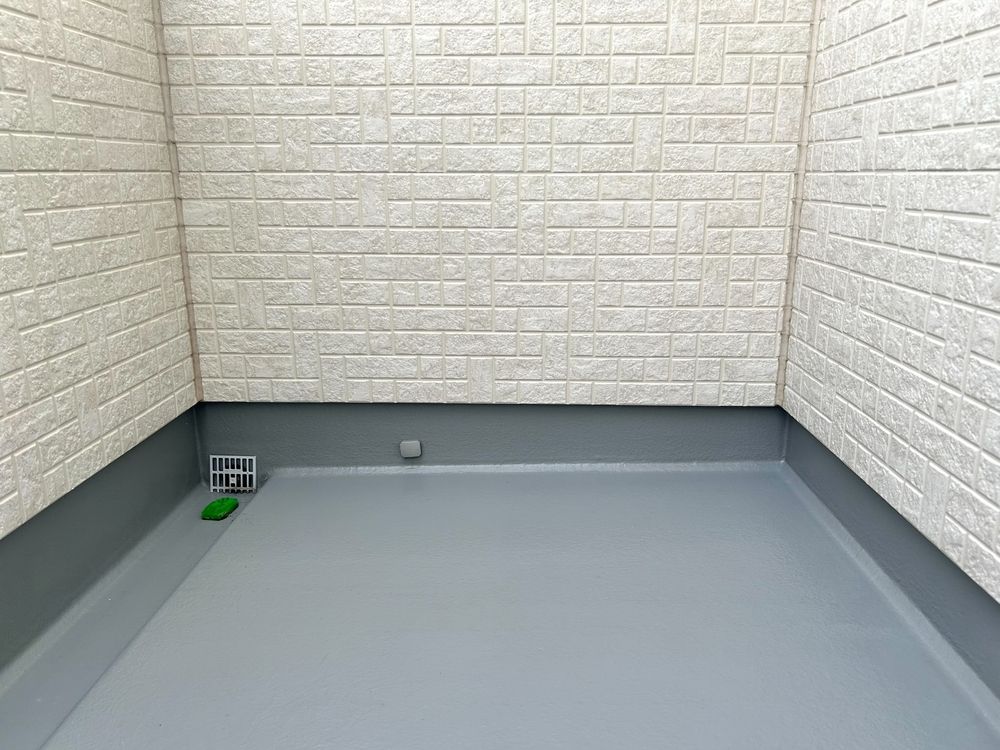
Once cured, the floor surface remains firm underfoot even during washdown, with no slick film forming over drains or in corners. You will notice that standing water does not cause the surface to swell or discolor, and the floor can be returned to full use quickly after cleaning without waiting for coatings to re-harden.
Urethane cement installations include surface preparation and the full system build, though additional underlayment or moisture mitigation may be scoped separately depending on slab condition. The system is designed for facilities operating under USDA or FDA inspection standards where both sanitation and durability are non-negotiable.
What Facility Managers Ask About Urethane Cement Installation
These questions address the installation process and what to expect when specifying urethane cement for a commercial or industrial floor in Bridgeton.
What preparation does the slab require before urethane cement is installed?
The concrete surface must be structurally sound, free of contamination, and profiled to accept the bond coat, which often means grinding off any existing coatings, oils, or weak surface paste before the urethane cement system is troweled down.
How does urethane cement handle the thermal shock that happens during kitchen washdowns?
Urethane cement is formulated to flex slightly under rapid temperature changes without cracking or delaminating, which is why it is specified for environments where boiling water meets cold concrete multiple times each shift.
What thickness is needed for a floor that will see daily forklift traffic and heavy pallet loads?
Most warehouse and food processing installations in Bridgeton use a quarter-inch build or thicker, depending on the load rating required and the condition of the underlying slab.
Can urethane cement be installed over an existing floor, or does the old surface have to come out first?
If the existing floor is bonded and structurally sound, urethane cement can sometimes be applied over it, but most jobs require full removal to ensure the new system bonds directly to clean concrete.
What does the floor look like once the urethane cement system is fully cured?
The surface is matte and slightly textured, with a uniform gray or tan finish that resists staining and can be cleaned with high-pressure equipment without damaging the coating.
Durashield LLC also installs urethane cement flooring in Atlantic City, Bensalem, Berlin, Brick, and Burlington. Contact Durashield LLC to arrange a facility walkthrough and receive a detailed scope based on your slab condition, operational requirements, and regulatory standards.