Seamless Systems for Chemical and Moisture Exposure
Resinous epoxy flooring in Bridgeton for warehouses, service bays, and commercial kitchens with heavy traffic and spill exposure
Warehouses, service bays, and commercial kitchens in Bridgeton and Millville often sit on concrete slabs poured decades ago without vapor barriers or proper subgrade preparation, leaving floors that wick moisture from below and deteriorate under chemical exposure and repeated cleaning. Durashield LLC installs seamless resinous epoxy flooring for commercial and residential spaces across South Jersey, building systems that handle heavy foot and vehicle traffic, moisture intrusion, and chemical exposure without seams where dirt and contaminants can collect. The owners, who have about 37 years of combined experience in the trade—27 years for the lead installer and 10 for his partner—install every system themselves, ensuring each layer is applied correctly and allowed proper cure time.
The slab is ground and cleaned to remove all surface contaminants, then cracks and spalls are repaired and a moisture test is conducted to determine whether a vapor-mitigation primer is necessary before the resinous layers are applied. A resinous primer goes down first, followed by the body coat and any broadcast aggregate or topcoat the specific job requires, with each layer given its full cure window before the next is applied to prevent delamination and soft spots.
Schedule an on-site assessment to review slab condition, moisture levels, and the chemical and traffic exposure your space sees daily.
What Seamless Resinous Flooring Actually Accomplishes
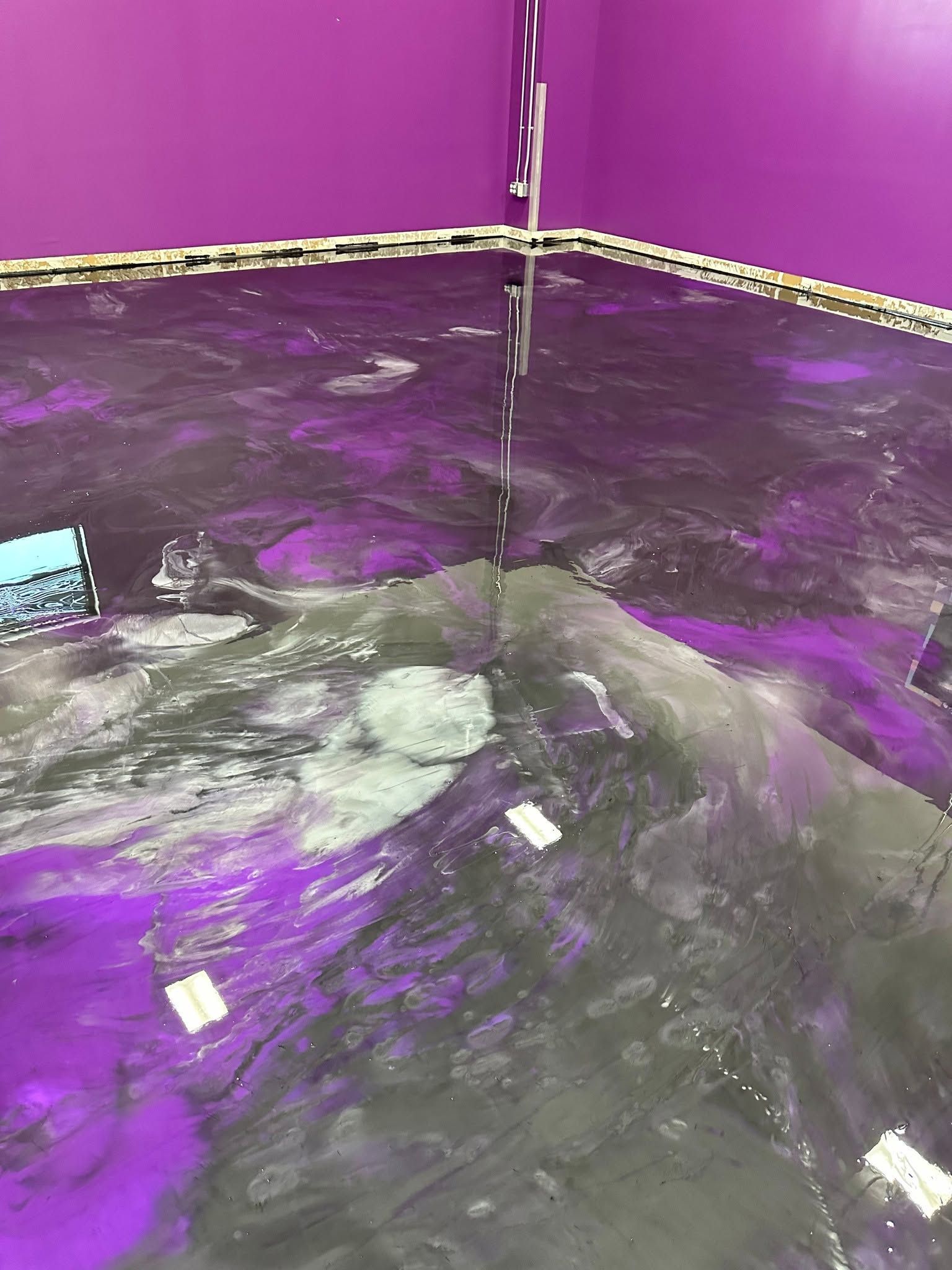
Resinous epoxy systems are built as continuous layers with no joints or seams, so liquids and contaminants remain on the surface where they can be cleaned away rather than seeping into cracks or grout lines. The thickness of the system and the chemical resistance of the resin are tailored to the exposure the floor will see, from light foot traffic to daily forklift use and frequent chemical spills.
Once the system cures, the floor is firm and slightly resilient underfoot, spills no longer soak into the slab or leave permanent stains, and cleaning can be done with commercial degreasers and pressure washing without damaging the coating. The surface remains intact under repeated impact and abrasion, with no peeling at edges or seams because there are no seams to fail.
Resinous systems do not bridge large moving cracks or correct significant slab settlement—those conditions require structural repair before the coating is installed. The system seals and protects the slab as it exists, preventing further moisture intrusion and chemical attack but not reversing damage already present.
Questions Before Starting Your Project
Commercial property managers and business owners typically ask these questions when evaluating resinous epoxy flooring for their facilities.
Why is a moisture test necessary before a resinous epoxy system is installed?
Concrete slabs in older commercial buildings in the region often allow moisture vapor to rise from the ground beneath, and if that moisture is trapped under an impermeable resinous coating, it will cause blistering and delamination within weeks unless a vapor-barrier primer is used.
How are cracks and spalls repaired before the resinous layers go down?
Cracks are routed out and filled with a flexible epoxy or polyurea that moves slightly with the slab, while spalled areas are ground smooth and patched with a high-strength repair mortar to create a continuous substrate for the resinous system to bond to.
What is the purpose of the resinous primer coat?
The primer penetrates into the prepared concrete and creates a chemical bond between the slab and the subsequent resinous layers, while also acting as a vapor barrier if the moisture test indicates it is needed.
What determines whether the system includes a broadcast layer or remains smooth?
Spaces that require slip resistance, additional thickness for impact protection, or a decorative appearance receive a broadcast of quartz or flake into the body coat, while areas prioritizing easy cleaning and chemical resistance are left smooth with just the topcoat applied.
How long before the floor can handle full operational traffic after installation?
Cure time depends on the specific resin used and ambient temperature—most resinous epoxy systems allow light foot traffic within 24 hours, with full chemical resistance and heavy traffic capability reached within three to seven days depending on coating thickness and temperature.
Durashield LLC also installs resinous epoxy flooring in Atlantic City, Bensalem, Berlin, Brick and Burlington. Contact Durashield LLC to arrange a site visit and discuss resinous flooring systems suited to your facility's traffic patterns and exposure conditions.