Surface Prep That Decides Whether Coatings Last
Concrete grinding in Bridgeton for removing laitance, old coatings, and weak surface paste so new flooring systems bond to stable, open concrete
The weak surface paste found on many older slabs in the Bridgeton and Millville area does not hold a coating—it looks solid but debonds within months once a new floor is applied over it. Durashield LLC provides concrete grinding in Bridgeton, preparing slabs by grinding off laitance, old coatings, and high spots so the new flooring bonds to structurally sound concrete. The grinding is performed by the owner-operators, who bring their own equipment and determine the profile depth required for the flooring system being installed.
The crew grinds the slab to the profile specified for your chosen coating or topping, vacuums the dust, and inspects the surface before any bonding agent or finish is applied. Whether grinding is included in the flooring scope or priced separately depends on the slab condition and system requirements, both of which are assessed during the on-site estimate.
Arrange a slab evaluation to identify the grinding profile and surface preparation required for your flooring project.
How Grinding Exposes the Surface That Coatings Actually Grip
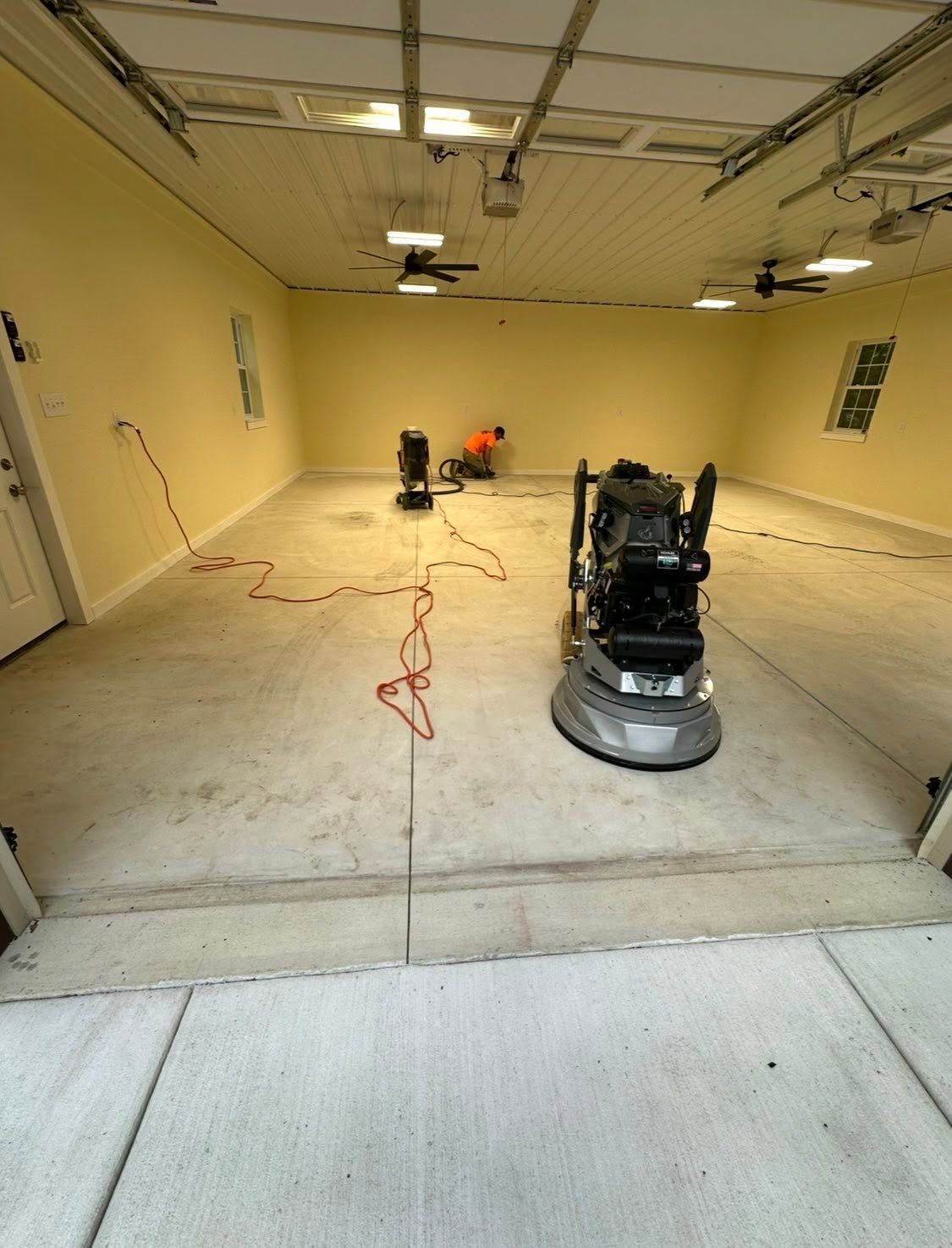
Grinding removes the top layer of concrete to expose the aggregate and dense paste beneath, creating a rough texture with open pores that allow mechanical bonding. In warehouses and industrial spaces across Bridgeton, skipping this step or grinding too shallow results in coatings that look fine initially but lift at the edges or blister under load because they never bonded to anything solid.
Once grinding is complete, you will see a uniform surface with visible aggregate and no glossy or powdery areas. The concrete will feel rough to the touch, and any high spots or uneven sections will have been leveled so the coating applies at a consistent thickness across the entire floor.
Grinding services include dust extraction and surface inspection, but do not always include crack repair or joint filling, which may be scoped separately depending on what the slab reveals once the top layer is removed. The goal is to deliver a surface that meets the profile standard for the specific coating or topping being installed.
Questions Before Grinding Your Concrete Floor
These questions address the grinding process and how it prepares a slab for coating or resurfacing in Bridgeton and surrounding areas.
What does a proper concrete profile look like after grinding?
A proper profile shows exposed aggregate with a texture similar to medium-grit sandpaper, with no smooth or sealed areas remaining, and the surface should be open enough that water absorbs immediately rather than beading on top.
How deep does the grinding need to go to remove old epoxy or paint?
Most old coatings require grinding between one-sixteenth and one-eighth of an inch, though thicker or deeply penetrated coatings may require additional passes to reach clean concrete underneath.
Can grinding fix a floor that is uneven or has settled in sections?
Grinding can level minor variations and high spots, but it cannot correct large-scale settlement or structural slab issues, which require underlayment or repair before any coating is applied.
What happens to the dust and debris created during grinding?
The grinding equipment is equipped with vacuum attachments that capture most of the dust during the process, and the remaining material is swept and vacuumed after grinding is complete so the slab is clean before the next step.
How soon after grinding can a new coating or topping be installed?
As long as the slab is dry and free of residue, coating can begin the same day or the following day, though moisture testing may be required if the concrete was wet-ground or if humidity is high.
Durashield LLC also provides concrete grinding in Atlantic City, Bensalem, Berlin, Brick, and Burlington. Call (609) 666-9198 to schedule a slab inspection and receive a grinding and prep estimate based on your project scope and surface condition.