
Floors Ground to a Sealed Finish
Polished concrete flooring in Bridgeton for commercial, warehouse, and retail spaces requiring low-maintenance, reflective surfaces
Polishing grinds the slab through progressively finer diamond abrasives to produce a smooth, sealed finish that is low maintenance and reflective, with no coating to peel or wear through over time. Commercial and warehouse floors in Bridgeton and Vineland are often older slabs with uneven surfaces, control joints that have settled differently, and years of wear that leave the concrete dusty and difficult to clean—polishing levels those surfaces and makes daily operations far easier by eliminating the dust and simplifying maintenance. Durashield LLC polishes concrete floors across South Jersey, Philadelphia, and Delaware, with owner-operators who have about 37 years of combined experience in the trade running the grinding work themselves on every job.
The crew starts by grinding the slab with coarse diamond tooling to remove high spots, surface contamination, and any existing coatings, then steps up through finer grits to build shine and smooth the surface. Cracks and control joints are filled as needed to prevent them from widening under continued use, and the floor is densified with a chemical hardener that penetrates the concrete and tightens the surface before the final polishing passes and sealer application. The process is dust-controlled and completed in place, with no downtime for coating cure.
Request a planning session to review slab condition, joint layout, and the level of reflectivity your space requires.
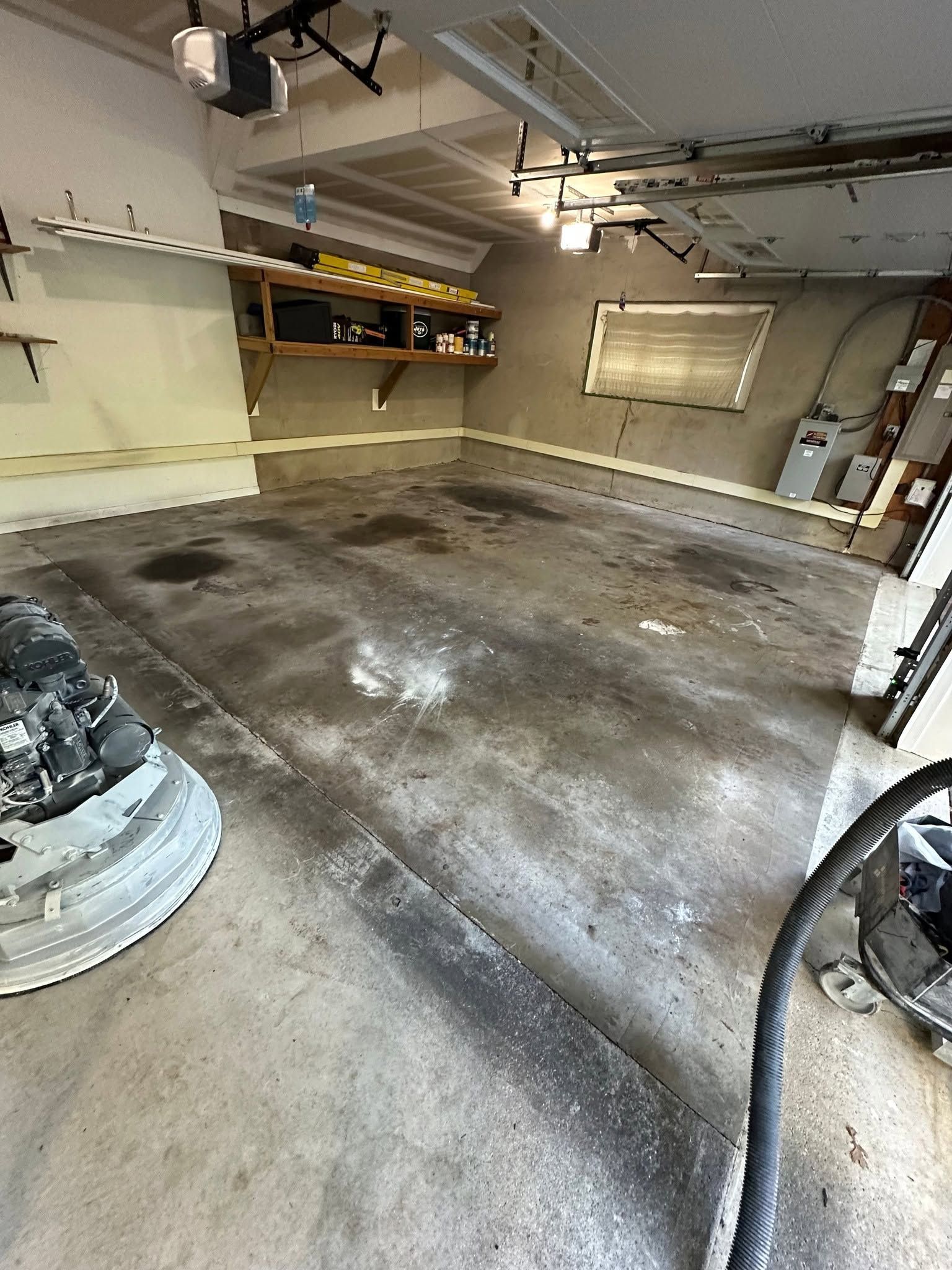
Why Polishing Works for High-Traffic Commercial Spaces
The grinding process removes the porous, weak surface layer of the concrete and exposes the denser aggregate beneath, which is then polished to a finish that resists wear and no longer sheds dust with every footstep or pallet movement. Densification hardens the surface further, turning the slab into a wear-resistant floor that improves with traffic rather than breaking down.
Once polishing is complete, the floor reflects overhead lighting, reducing the need for additional fixtures, and routine cleaning involves sweeping and damp mopping without specialized chemicals or equipment. The surface no longer produces the fine concrete dust that coats inventory, equipment, and ventilation systems in older warehouse spaces.
Polishing does not hide existing discoloration or patching—it reveals the slab as it is, with any repairs, control joints, and color variation becoming part of the finished appearance. If a uniform color is required, polishing alone will not deliver it; a topical stain or dye must be applied before the final polishing stages.
What Property Owners Ask About the Work
These questions address the polishing process and considerations specific to commercial and industrial applications in the region.
What does densification accomplish during the polishing process?
The densifier is a liquid hardener that penetrates the concrete and reacts chemically with the calcium in the slab, tightening the surface and making it more resistant to abrasion and moisture penetration, which extends the life of the polished finish.
How are control joints and cracks handled before polishing begins?
Joints and cracks are routed and filled with a semi-rigid epoxy or polyurea that flexes slightly with slab movement, preventing the crack from widening while keeping the floor continuous and easier to clean than joints left open.
Why does polishing eliminate the dust problem in older warehouse floors in Bridgeton?
Grinding removes the weak, carbonated surface layer that breaks down under traffic and creates airborne dust, while densification and polishing close the pores and harden the slab so it no longer releases particles when equipment or foot traffic passes over it.
What determines the level of shine the floor will have once polishing is finished?
The final grit of diamond abrasive used in the polishing sequence controls reflectivity—stopping at a medium grit produces a satin finish with low glare, while continuing through finer grits creates a high-gloss surface that reflects lighting and surrounding objects clearly.
How soon can the floor be used after polishing is complete?
The floor can handle light foot traffic immediately after the final polishing pass, and full operational use including forklifts and pallet jacks can resume within hours, since there is no coating that requires cure time.
Durashield LLC also polishes concrete floors in Atlantic City, Bensalem, Berlin, Brick and Burlington. Arrange an on-site consultation with Durashield LLC to assess your slab and discuss polishing specifications that match your facility's needs and traffic patterns.