
Joints That Move Without Failing
Polyurea Expansion Joint Filling in Bridgeton for concrete slabs segmented into panels where traffic and moisture enter first
Polyurea fills and seals expansion joints in concrete slabs throughout Bridgeton and across South Jersey, curing into a flexible elastomer that moves with the slab as it expands and contracts rather than cracking or pulling away from the edges. Commercial kitchens, warehouses, and industrial floors are typically cut into large panels, and the joints between them are the first places where forklift wheels break down sealant, where water migrates below the surface, and where the floor system begins to fail. Durashield LLC handles joint filling on every job with both owner-operators working the joint, so the people who quote the repair are the ones mixing, applying, and leveling the polyurea on site.
The process begins by cleaning out the joint and removing any loose or failed material, including old sealant, dirt, and debris that has worked its way into the gap. The edges of the joint are prepared so the polyurea bonds to sound concrete rather than to a contaminated or friable surface, and primer is applied where the specification requires it, particularly in joints that will see heavy wheeled traffic or chemical exposure. Polyurea is then mixed and applied in one continuous pass, filling the joint from the bottom up, and the surface is leveled to match the surrounding floor so wheels and foot traffic pass over it without catching. The job is priced on the total linear footage of joint and the condition of the concrete edges.
Request a joint inspection to determine preparation requirements and polyurea system compatibility with your floor traffic.
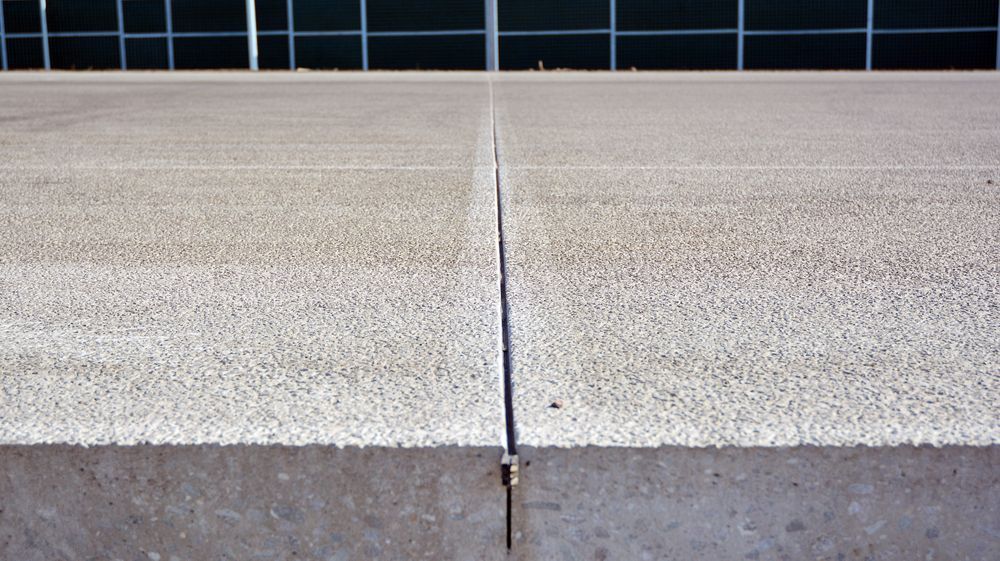
How Joint Filling Addresses Long-Term Movement
Expansion joints are designed to move, and any material placed in them has to stretch and compress without tearing or debonding. Polyurea cures quickly and remains elastomeric, meaning it deforms under load and returns to shape, so it absorbs the movement of the slab rather than resisting it. Owner-operators bring a fully equipped trailer to every site, so unexpected edge damage or moisture conditions are addressed the same day rather than requiring a return visit.
Once the joint is filled and cured, you will notice that the gap no longer collects debris, water does not migrate into the slab at that seam, and wheeled traffic passes over the joint without the jarring drop or edge chipping that happens when joints are left open or filled with rigid materials. The polyurea surface remains flush with the floor and does not crack or pull away under normal use.
The work includes preparation of the joint edges and application of the polyurea system, but it does not include repair of spalled or damaged concrete adjacent to the joint, which is assessed separately. If the slab has settled unevenly or the joint has widened beyond the system's rated movement range, those conditions are flagged during the inspection and priced as additional work.
Questions Before Starting Your Project
Joint filling involves material selection, edge preparation, and timing, and property managers and building owners in the Bridgeton area often want to understand how the work is sequenced and what affects long-term performance.
What happens if the joint edges are damaged or crumbling?
Damaged edges are ground back to sound concrete and may require a repair mortar or epoxy to rebuild the edge before the polyurea is applied, so the elastomer has a stable bond surface along the full length of the joint.
How soon can the floor be used after the polyurea is applied?
Polyurea typically cures to foot traffic within one to two hours and to full traffic within four to six hours, depending on the product and ambient temperature, though chemical exposure or heavy loads may require a longer cure window.
Why does the joint need to be cleaned out rather than just filled over the old material?
Old sealant, dirt, and loose debris prevent the polyurea from bonding to the concrete, and any contamination left in the joint will cause the new material to delaminate or pull away under traffic.
What is the difference between polyurea and urethane joint fillers?
Polyurea cures faster and is more resistant to moisture and chemicals during application, making it better suited for joints in occupied buildings or industrial spaces where downtime is limited and exposure conditions are harsh.
How is the joint leveled so it does not create a trip hazard or catch wheels?
The polyurea is applied slightly overfilled, then struck or troweled flush with the surrounding slab while still workable, and any excess is removed before the material hardens, leaving a smooth transition across the joint.
Both owners work the floor on every job, handling preparation, priming, and application without subcontracting any part of the joint filling process. Durashield LLC also fills expansion joints in Atlantic City, Bensalem, Berlin, Brick, and Burlington.