Surfaces That Stop Absorbing Stains and Dust
Concrete sealing in Bridgeton for older porous slabs that stain easily and collect dust
Many of the concrete floors in Bridgeton and Millville were poured decades ago with little attention to finish quality, leaving slabs that absorb oil, water, and grime while shedding a constant layer of concrete dust. Durashield LLC seals those surfaces after cleaning and preparing them, applying a protective sealer that stops moisture penetration and prevents staining on bare or previously stained concrete. The owner-operators handle the prep and application themselves, ensuring the sealer bonds properly to slabs that have spent years exposed.
Sealing begins with a thorough cleaning to remove any contaminants that would prevent adhesion, followed by drying time and a surface check to confirm the slab is ready. The sealer is then applied in the number of coats determined during the on-site estimate, with coverage tailored to the traffic the floor will handle—a residential garage floor seeing occasional vehicle use receives a different treatment than a workshop floor exposed to daily spills and equipment movement.
Schedule a property evaluation to identify specific surface conditions and sealer requirements.
What Proper Concrete Sealing Requires
The slab must be both clean and dry before any sealer is applied, because moisture trapped beneath the coating will cause it to delaminate within months. Durashield LLC tests the surface and waits for full drying, then selects the sealer product based on what the floor will be used for and how much chemical or abrasion resistance is needed.
Once the sealer cures, the floor no longer absorbs liquids on contact, spills bead on the surface instead of soaking in, and the concrete stops releasing the fine dust that coats tools and storage shelves. Cleaning becomes a matter of sweeping or mopping rather than scrubbing stains that have already penetrated the slab.
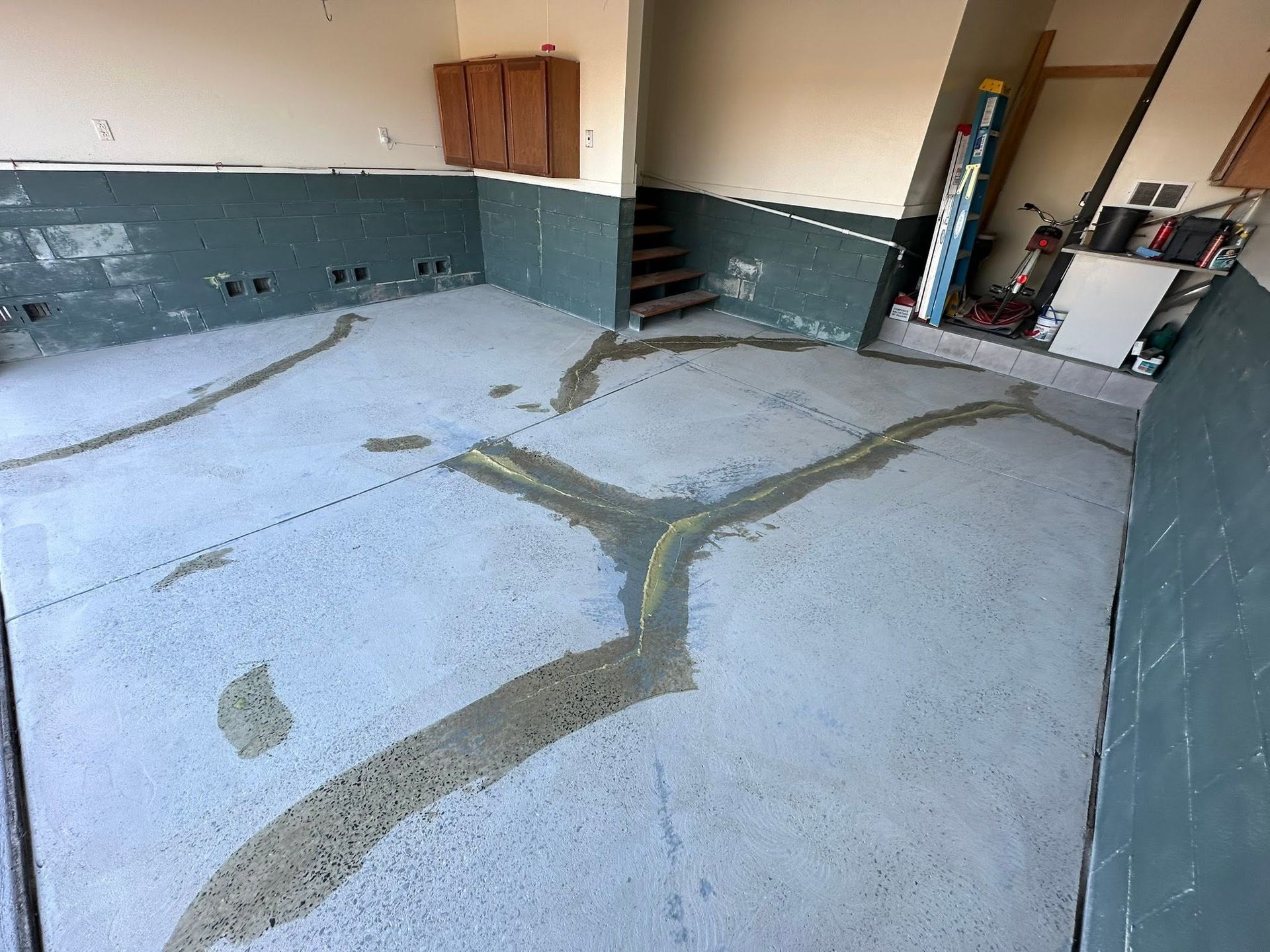
The sealer does not fill large cracks or level uneven areas—those are separate repairs that happen before sealing if the slab requires them. What it does is close the pores in the concrete, turning a surface that behaves like a sponge into one that can be maintained without constant re-staining.
Questions Before Starting Your Project
These questions address the work itself and what property owners in Bridgeton typically ask before sealing begins.
What happens if the slab is not fully dry before sealing?
Trapped moisture will push the sealer back up as it tries to escape, causing bubbling and peeling that requires removal and reapplication once the slab dries completely.
How is the surface prepared before the sealer goes down?
The crew cleans the slab with degreasing agents or mechanical scrubbing to remove oil, dirt, and any previous coatings that would block adhesion, then allows drying time and inspects for moisture.
What changes after the sealer cures?
Liquids no longer soak into the concrete immediately, the surface stops shedding dust when you walk across it, and stains from oil or chemicals can be wiped up instead of becoming permanent discoloration.
How often does a sealed concrete floor need to be resealed?
Traffic patterns and exposure determine resealing intervals—a residential garage floor may go five to seven years, while a commercial shop floor with heavy equipment use may need attention every two to three years as the sealer wears through in high-traffic lanes.
Why do older slabs in Bridgeton need sealing more than newer pours?
Older concrete in the area was often poured without hardeners or finish treatments, leaving a more porous surface that absorbs liquids and deteriorates faster under repeated exposure to moisture and chemicals.
Durashield LLC also seals concrete floors in Atlantic City, Bensalem, Berlin, Brick and Burlington. Contact Durashield LLC to arrange an on-site review of your slab condition and discuss sealer options suited to your space and usage.